Github (Primarily with Brian Cha, and with extraordinarily minimal assistance from Liz Johnson, Marc Rothken, Shreya Dasari)
Motivations
Recipe content is especially interesting as one of the ultimate goals of the recipe creator is for audiences to replicate their work. This opens up avenues for much interesting inspection of how audiences engage with content creators. Are audiences actively recreating recipes, and if so, are they deeming these to be good recipes? Challenging recipes? Overly convoluted recipes?
We can also analyze whether YouTube recipe creators are focused on simply creating and presenting the recipe, or also looking to present themselves as a marketable and personable figure that can attract an audience.

This image presents another interesting thing we can look at. Each creator also has a specific style of recipe. The poster here states that they liked Adam Ragusea’s “vague” ingredient amount and the fact that everything didn’t have to be precise and well-measured out. We also want to try and capture the style of recipe creators to differentiate them somehow.
We have come up with a series of metrics to quantify these questions: commercial, personability and entertainment, recipe quality. We develop models to computationally analyze each.
Commercial
We analyze whether channels sell their own products and if they have sponsors as well as sponsor frequency. To do this, we scrape descriptions from videos to check for cookbooks and apply pre-built models to check if sponsorships exist in videos. We can see which sponsors most frequently sponsor which channels, how long the sponsorships run for, and when in the video sponsors pop up. This is done through a combination of scraping and existing neural networks that can extract sponsors from video transcripts.
Personability and Entertainment
We want to know whether channels are purely focused on presenting recipes, or also seek to entertain audiences and market the creator as a central personability in videos. We check this through a couple of ways. We can see how often faces show up and the percentage of the screen a face occupies. We hypothesize that creators who care more about their own “personal brand” will show their face more in videos, whereas creators who purely care about presenting their recipes wil typically show more shots of food and less of their face. We use haar cascade and other CV methods to perform face detection.
We can also check the words-per-minute of videos. Typically videos that are fairly tight and mostly driven by the recipes will have more words per minute and will focus on quickly and compactly presenting the food and how to cook it. We perform this analysis by simply scraping the transcripts of videos, counting the amount of words, and then dividing by total time of video.
Another set of metrics we check are the sentiment scores of video titles and video transcripts. We hypothesize that video titles that are more polarizing tend to trend more towards “clickbait” and video transcripts that are more highly polarized tend to be geared towards entertaining audiences. We utilize a BERT model trained on the IMDB dataset.
Recipe Quality
We investigate recipe quality through the amount of ingredients and instructions required to complete them. We hypothesize that recipes that are poorly developed and not suitable for the average person tend to be overly convoluted and have lots of ingredients and instructions. We believe this also extends into the “entertainment” part of things, as convoluted recipes can be more fun to watch and allow the creator to display their technical skill. To accomplish an analysis of recipe complexity, we scrape recipe websites and use CRF, POS tagging, and other methods to grab out number of ingredients and steps.
Case Study: Joshua Weissman vs. Food Wishes
To fully understand some of our results, we can take a look at a case study of Joshua Weissman vs. Food Wishes. I have embedded a video of each channel below if you are interested.
Joshua Weissman
Its pretty easy to see a marked difference between the two channels. Let’s take a look at some metrics we’ve developed and what they say about each.
Entertainment and Personality: Thumbnails
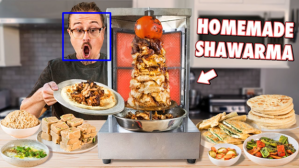

When we analyze the amount of thumbnails with faces, we observe the following:
- Joshua Weissman: 23% of videos contain faces
- Foodwishes: 0% of videos contain faces
We take this to mean that Joshua Weissman tends to present himself much more as an on-screen personality and utilizes a bit of clickbait to attract audiences, whereas Food Wishes tends to focus more on recipe content.
Entertainment and Personality: Title Polarity
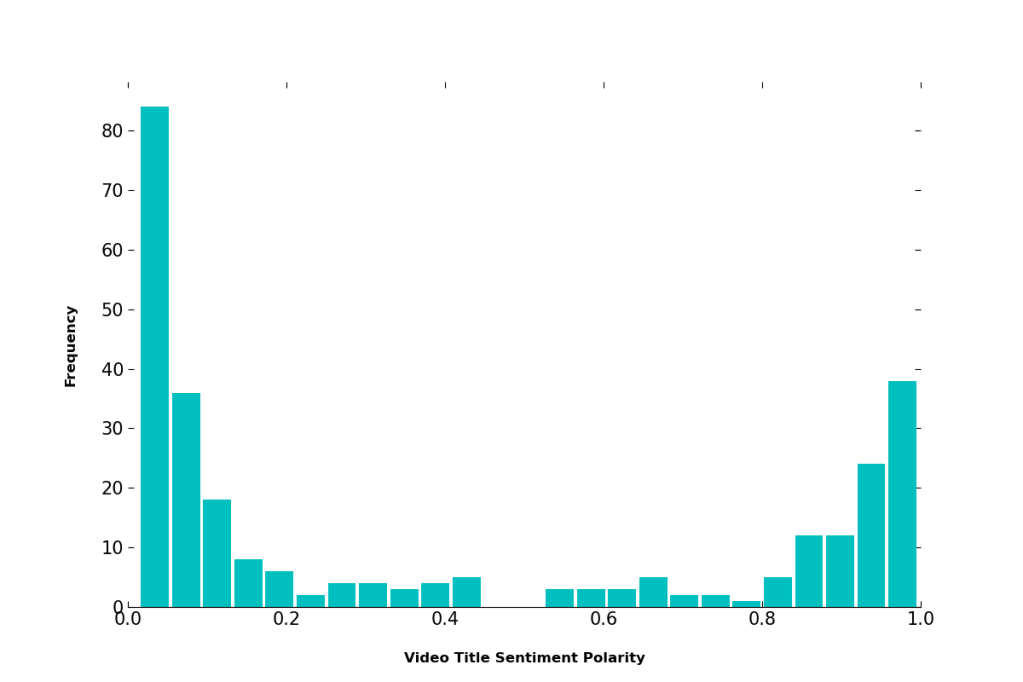
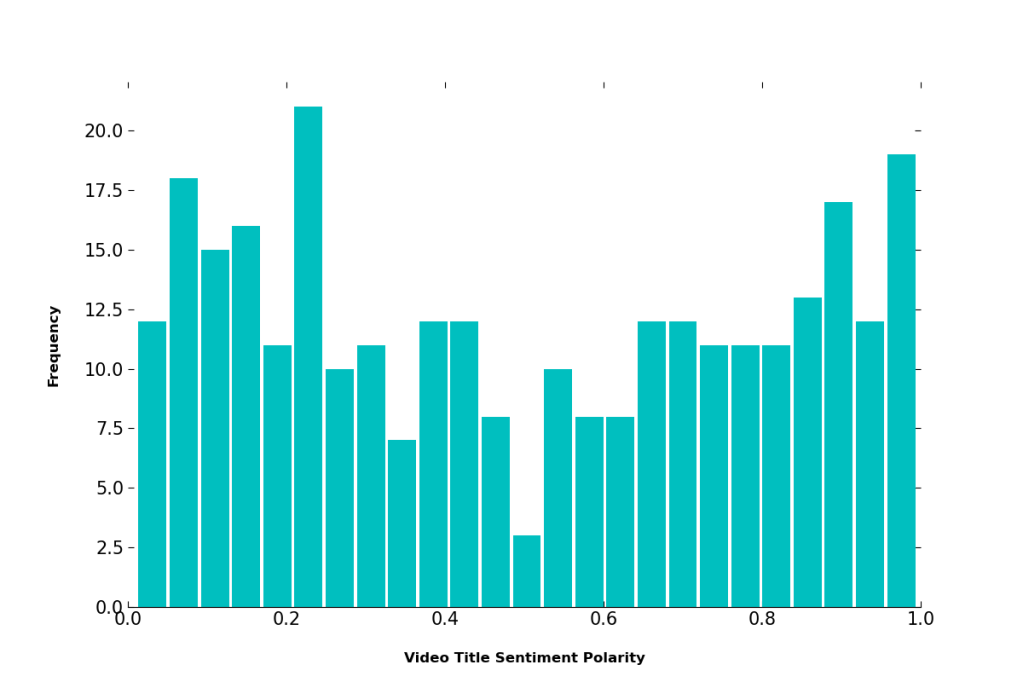
(Left is Joshua Weissman, right is Food Wishes)
When we look at the sentiment polarity of titles, we observe the Joshua Weissman’s titles are much more polarized, while Food Wishes are all over place. This indicates two points: Joshua Weissman video titles are more dramatic and may point to clickbait, and they also follow a similar titling structure due to their concentration. Meanwhile, Food Wishes video titles are not put together with a ton of thought. Upon inspection, we see that Food Wishes simply names his videos by the recipe he is showing.
Entertainment and Personality: Face Detection
We also look at how often the creator shows their face in a video. We speculate that if they show their face more, they are moreso trying to sell themselves to their audience.

We look at a sample face-detection run from Joshua Weissman’s American Grilled Cheese vs. French Grilled Cheese run. Weissman primarily shows his face at the start of the video when he introduces the video to the audience, and then shows it again at the end when he tries the food. Meanwhile, Food Wishes does not show his face on camera in any of his recipe videos.
Commercial: Sponsors and Products
The majority of Joshua Weissman videos market his cookbook. However, he also has a wide array of other sponsors, including:
- TUMS
- Geico
- Ghiradelli
- Trade Coffee
- Butcher Box
- National Pork Board
Food Wishes videos are typically unsponsored, though it should be noted that Food Wishes also runs the AllRecipes website.
This info enables us to conclude that perhaps Weissman is more focused on building his brand and gaining commercial opportunities.
Recipe Complexity: Ingredients
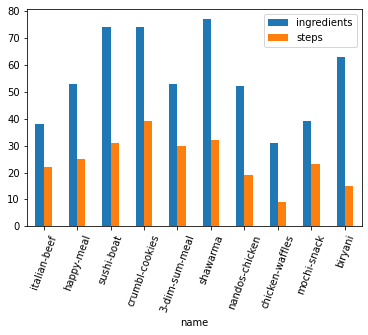
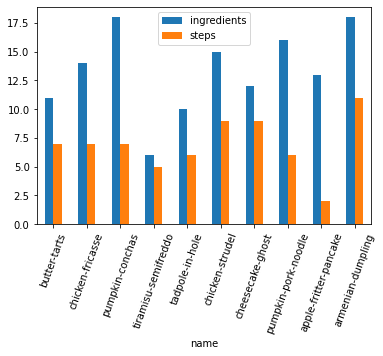
(Joshua Weissman recipes on the left, Food Wishes on the right)
When we look at a set of recipes posted by each channel, we see that Joshua Weissman recipes have an obscene amount of ingredients. This is primarily due to the fact that his recipes are typically long, complex, multi-part recipes. Furthermore, he tends to make everything from scratch, including things like bread, pickled vegetables, and more, which substantially ups his ingredient counts and steps. Food Wishes, on the other hand, sticks to simpler recipes with less complexity and ingredients.
We conclude that this recipe complexity disparity may point to the fact that Joshua Weissman’s videos are more about creating an entertaining recipe for the viewer to watch Weissman cook. The viewer can enjoy Weissman’s flourishes of technical ability and his on-screen personality. Meanwhile, if viewers want to have a nice recipe that they can replicate at home, they should probably go to Food Wishes.
Next Steps
We have completed the development of metrics for YouTubers. However, we have not begun to look at audiences quite yet. To understand the relationship between recipe creators and their audiences, we can look at the sentiment of comments on videos, word frequency in comments on videos, the amount of times a creators recipe is posted on different social media websites, and much much more. With additional metrics, we seek to understand how the different presentation methods of recipe creators affect their viewership.
 Tai Xiang's Random Projects
Leave a comment